Welcome to Old-EastLondon.co.uk
- Calendars
- Prints
- Framed Prints
- Canvas Prints
- Tableware
- Mousemats
- Ceramic Mugs
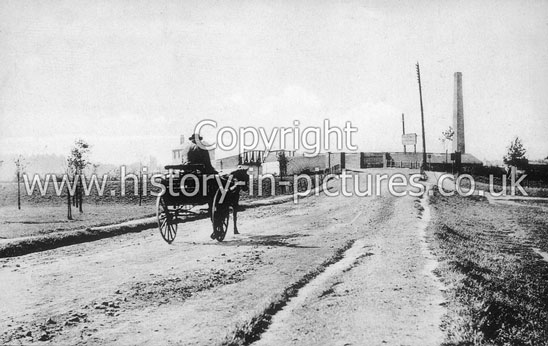
Homerton Bridge, Homerton Road, Hackney Marshes, London. E9. c.1904
The East End of London, also known simply as the East End, is the area of London, England, United Kingdom, east of the medieval walled City of London and north of the River Thames. Although not defined by universally accepted formal boundaries, the River Lea can be considered another boundary. Use of the term in a pejorative sense began in the late 19th century, as the expansion of the population of London led to extreme overcrowding throughout the area and a concentration of poor people and immigrants. The problems were exacerbated with the construction of St Katharine Docks (1827) and the central London railway termini (1840 - 1875) that caused the clearance of former slums and rookeries, with many of the displaced people moving into the East End. Over the course of a century, the East End became synonymous with poverty, overcrowding, disease and criminality. The East End developed rapidly during the 19th century. Originally it was an area characterised by villages clustered around the City walls or along the main roads, surrounded by farmland, with marshes and small communities by the River, serving the needs of shipping and the Royal Navy. Until the arrival of formal docks, shipping was required to land its goods in the Pool of London, but industries related to construction, repair, and victualling of ships flourished in the area from Tudor times. The area attracted large numbers of rural people looking for employment. Successive waves of foreign immigration began with Huguenot refugees creating a new extramural suburb in Spitalfields in the 17th century. They were followed by Irish weavers, Ashkenazi Jews and, in the 20th century, Bangladeshis. Many of these immigrants worked in the clothing industry. The abundance of semi- and unskilled labour led to low wages and poor conditions throughout the East End. This brought the attentions of social reformers during the mid-18th century and led to the formation of unions and workers associations at the end of the century. The radicalism of the East End contributed to the formation of the Labour Party, and Emmeline Pankhurst based campaigns for women's votes in the area.
Click Here for Main Store Click Here for Calendars